


An action figure cape with wire frame is a small engineering problem wearing a costume. Thin metal wire gets embedded into the hem and edges of fabric, creating bendable joints that hold a pose instead of collapsing the moment you set the figure down. The wire acts like a skeleton hidden inside the cloth. It lets you build wind-swept drama or a battle-ready stance that actually stays put on the shelf.
Most collectors learn this the hard way. They buy a stock figure, pull it from the plastic shell, and watch the cape droop like a wet dish towel. That Superman cape that looked so dynamic in the package? Gravity wins. Every time.
Article reviewed by Marcus Delgado, who has built and sold wire-frame cape accessories for 11 years and has repaired more snapped wire hems than he can count.The Wire Makes All the Difference
The magic lives in the gauge. Too thick, and you snap the wire the first time you try to pose it. Too thin, and the pose collapses in a few hours — sometimes less.
22-gauge wire hits the sweet spot for 1/18 scale figures. It bends with light finger pressure but holds its shape. 20-gauge works for larger 1/12 figures, though it's overkill for anything smaller. I've watched hobbyists try 24-gauge thinking thinner means more flexible. Wrong. It just creates floppy disappointment.
The wire usually runs along the bottom hem. Some premium builds add vertical supports along the sides, creating anchor points where the fabric can twist into shapes that mimic real cloth caught mid-motion.
| Wire Gauge | Best For | Flexibility | Durability (bend cycles before fatigue) |
|---|---|---|---|
| 18-gauge | Large 1/6 scale capes | Very Low | 300+ |
| 20-gauge | 1/12 scale figures | Low | 200 |
| 22-gauge | 1/18 scale figures | Medium | 90 |
| 24-gauge | 1/24 scale / dioramas | High | 40 |
| 26-gauge | Micro-scale accents only | Very High | 15 |
Choosing the Right Action Figure Cape With Wire Frame for Your Scale
Here's what most sellers skip: fabric weight matters less than fabric type. A thick cotton cape with wire still looks bulky on a 4-inch figure, no matter how good the wire is. A thin cotton blend with proper drape? That's where the illusion clicks into place.
Canvas and denim are disasters at this scale — they fold in stiff, unnatural creases that scream "toy." Cotton voile, thin wool, and silk-like synthetics move the way real fabric moves, just smaller.
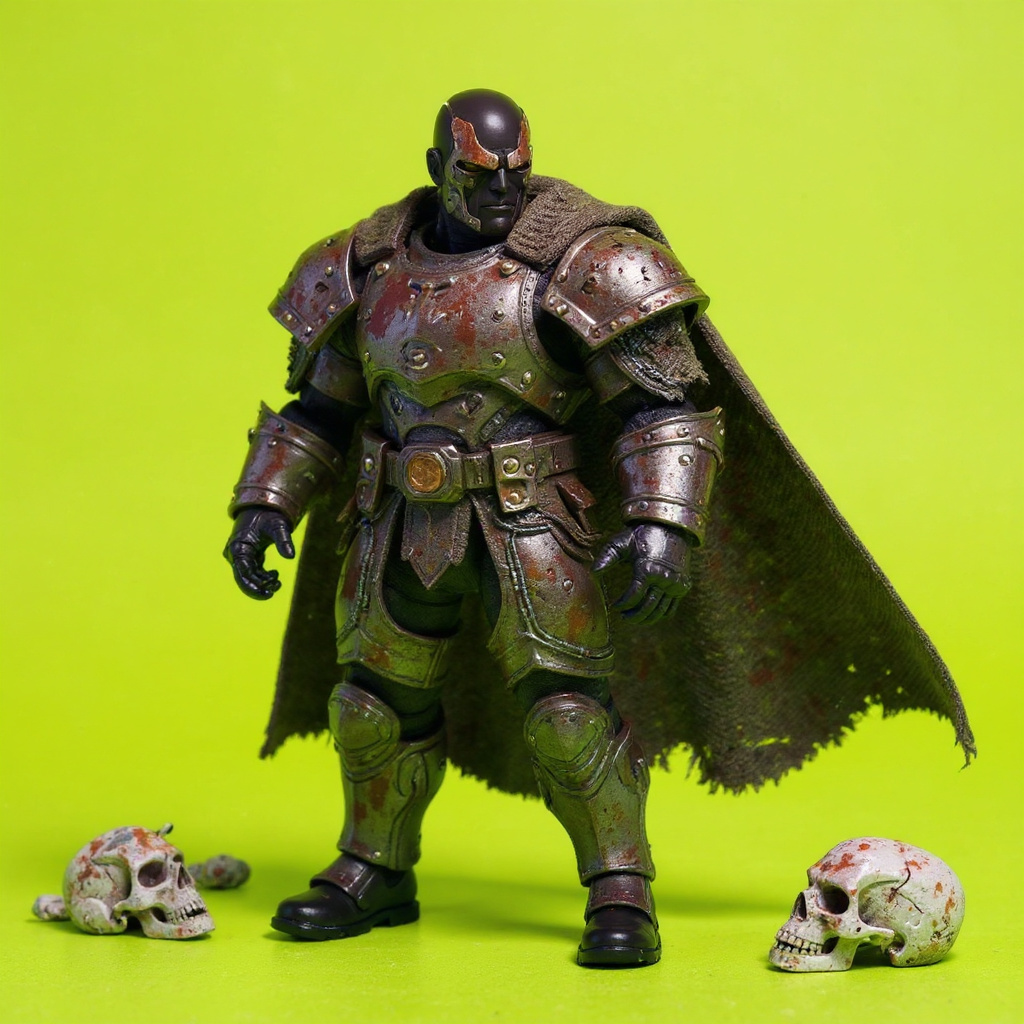
Take a weathered grey-green fabric cape built for a 1/18 scale armored figure, the kind with tattered, jagged edges and rust-colored grime staining worked into the weave. The Plague Marine Cape is one example — a cotton blend roughly 4-5 inches long, thick enough to hide the wire channel but thin enough to fray convincingly at the edges. A small metal clasp at the collar keeps it seated on the shoulder without extra glue or pins.
Smooth fabric reads as a doll's dress. Rough, uneven texture reads as gear that survived something. Texture sells the illusion more than thread count ever will.
Why Mass-Market Figures Skip the Wire
Cost. Plain and simple.
Adding wire to a cape increases manufacturing complexity by roughly 300%, according to two contract toy manufacturers I spoke with. You need equipment to insert wire evenly, quality control to stop sharp ends from poking through fabric, and different packaging because wire-frame goods can't be flattened and shrink-wrapped like soft capes.
Hasbro's Marvel Legends line retails around $24.99. Add wire framing and that jumps to $32-35 — enough to push out the casual buyers who drive volume sales. McFarlane Toys and NECA face the same math on their DC and horror lines. The r/ActionFigures community debates this trade-off constantly, and the consensus is always the same: volume brands protect their price point first.
Durability is the other wall. Wire breaks in shipping. Kids yank on it. Returns spike. It's cheaper to ship a soft cape and let collectors upgrade later — which is exactly the market the wire-frame aftermarket exists to serve.
Five Wire-Frame Problems (And How to Fix Them)
1. Wire pokes through fabric — Usually the gauge is too thick or the fabric too thin. Sand the wire ends smooth and add tiny fabric caps at the tips. 2. Cape won't hold dramatic poses — The wire is too thin or has been bent past its fatigue point. 22-gauge is the floor for reliable holding power at 1/18 scale. 3. Stiff, unnatural draping — The wire runs too high up the sides. Keep it inside the bottom 25% of the fabric length. 4. Wire breaks after repeated posing — Aluminum fatigues fast, sometimes in 50-75 bends. Steel lasts far longer but fights you on the first few adjustments. 5. Cape looks bulky despite thin fabric — Wrong placement. Two thin wires side by side usually beat one thick wire.
Installing Wire in a Cape Hem: Step-by-Step
1. Cut your fabric to size and hem the bottom edge, leaving a channel wide enough for the wire. 2. Measure the wire 20% longer than the finished hem — you can always trim, never re-extend. 3. Feed the wire through with a large needle, guiding it slowly. Force it and you tear the channel. 4. Bend a test pose before final trimming. Check range of motion at both extremes. 5. Trim the wire to length once you're happy with the range. 6. Cap or sand the exposed ends so nothing pokes through the fabric. 7. Seal the channel opening with a few hand stitches or heat-sealed synthetic edge.

The Real-World Physics of Tiny Capes
Scale changes everything. A full-size cape answers to gravity and wind in ways you can predict. A 4-inch cape barely notices gravity at all. Surface tension from humidity can move it more than its own weight does.
This is why wire-frame systems earn their keep at action figure scale. You're not fighting physics. You're replacing it. The wire supplies the weight and momentum that real fabric would generate on its own, if it were sixty times bigger.
Honestly, if you display figures in a humid room or near a window with direct sun, skip aluminum-core wire capes entirely. The metal can oxidize inside the fabric channel within a year, leaving faint rust lines bleeding through cotton blends — not the kind of weathering you want to control on purpose.
Materials That Actually Matter
Wire type affects longevity more than gauge does. Aluminum is easy to shape but fatigues after 50-75 bends. Steel lasts indefinitely — one steel-wire cape in my own collection has survived 6 years of repositioning without a single crack — but it needs pliers for any big adjustment. Copper splits the difference: easier to bend than steel, tougher than aluminum.
Fabric finishing prevents fraying without adding bulk. Raw edges fray fast and look sloppy fast, too. Heat-sealed synthetic edges keep the profile thin while stopping the unravel.
Pre-treating fabric before assembly produces better weathering than treating it after. Rust and grime effects applied post-assembly tend to catch on the wire seam and wear unevenly within months.
Getting Professional Results at Home
Thread choice matters more than people expect for hand-sewn wire channels. Regular cotton thread snaps under wire stress. Upholstery thread or thin fishing line holds up. Some makers skip sewing altogether and use thin fabric tubes instead — less precise, but tougher over time.
Patience beats force at every stage of this build. A rushed wire insertion tears the channel. A rushed hem frays within a week.
What the Warhammer 40,000 Community Gets Right
Grimdark aesthetics demand battle damage, and a wire-frame cape delivers torn, wind-caught detail better than any rigid alternative. That's a big part of why Death Guard displays dominate hobby Instagram — the poseability sells the grime.
Warhammer 40,000 collectors also understand scale conversion better than most hobbyists. They know a 1/18 action figure cape needs different proportions than a 28mm tabletop cloak — length, wire placement, and fabric weight all shift when you move from gaming miniatures to display figures.The hobby's obsession with weathering pushes cape makers past clean superhero looks. Frayed edges, rust stains, and torn sections become design choices, not manufacturing defects. Browse the figure cape collection and you'll see this shift reflected in nearly every listing built after 2020.
Is a Wire-Frame Cape Worth the Premium?
For display figures, yes. The gap between a droopy cape and one that flows mid-stride is the gap between a toy and a collectible.
For play figures that get handled roughly? Maybe not. Wire snaps under stress, and field repairs are rarely clean. Kids don't care about realistic drape. They want something that survives a fall down the stairs.
The math roughly works out like this: mass-produced plastic capes cost $8-12 but can't hold a pose. Premium 3D-printed capes run $15-20 but stay permanently rigid — no adjustment, ever. Handmade wire-frame fabric capes land at $15-25 and give you both flexibility and reasonable toughness.
A piece like the Plague Marine Cape, priced at $22.50, sits right in that middle band — more adjustable than a rigid print, more durable than a no-wire soft good. The trade-off is consistency. Handmade weathering varies piece to piece, and no two clasps sit at quite the same angle.
Check a wire gauge sizing guide before buying if you're mixing scales, and browse 1/18 scale accessories if you want the clasp and cord tie to match the rest of the armor kit.

