


The secret to DIY cloth clothing for action figures that moves with your poses isn't fancy tailoring. It's wire. Thin armature wire threaded through cape hems, coat tails, and flowing garments turns limp fabric into a dynamic element that holds a dramatic shape without you fussing over it every five minutes.
Most collectors stick with factory plastic capes because they assume cloth will look messy or fall flat. Build movement into the fabric itself, though, and you get both: real textile texture that stays exactly where you put it.
Why Most DIY Cloth Clothing for Action Figures Looks Terrible
Factory-made action figure clothing follows one rule: cheap production. Manufacturers use thin fabric, skip proper fitting, and rely on elastic bands or velcro that bunches around joints. The result hangs like a deflated balloon.
Even high-end 1/6 scale figures ship with disappointing softgoods. That $300 figure might have incredible sculpted details. But the cloth jacket looks like someone sewed it without ever touching real fabric.
This is why serious collectors buy custom pieces or learn to sew their own. The gap between amateur and professional results comes down to three things: accurate measurements, quality materials, and understanding how miniature scale changes fabric behavior. Learning this kind of hand-finished work from scratch takes a weekend of trial and error — worth it, if you plan to make more than one piece.
Getting Accurate Measurements for Miniature Bodies
Measuring a 7-inch figure isn't scaled-down human tailoring. Action figure bodies have exaggerated shoulders, compressed torsos, and joint gaps that no human pattern accounts for.
Start with these core measurements:
1. Chest circumference at the widest point (mid-pectoral on most figures) 2. Shoulder width from joint to joint, not the actual shoulder width 3. Arm length from shoulder joint to wrist with the arm bent 90 degrees 4. Torso length from base of neck to natural waist 5. Hip circumference at the widest point of the pelvis 6. Inseam length from crotch to ankle, legs in neutral standing position
Don't measure with the figure in extreme poses. Most articulated joints add 2-3mm of bulk when bent, so clothes fitted to a dynamic pose end up loose when the figure stands normally.
For 1/12 scale figures (6-7 inches), add 1-2mm ease to chest and hip measurements. For 1/6 scale (12 inches), add 3-4mm instead. 1/12 scale fabric doesn't drape like full-size textile. It needs the extra room.
Fabric Choice Changes Everything
Cotton quilting fabric is your best friend for sewing doll clothes at this scale. It's thin, holds a crease, and doesn't fray the moment you cut it.
Avoid these:
- Felt: Too thick, folds crease into sharp angles instead of soft curves - Synthetic satin: Shows every wrinkle under display lighting - Jersey knits: Stretch unpredictably, lose shape within weeks - Canvas or denim: Way too heavy for anything under 12 inches
For capes and flowing garments, silk dupioni or lightweight cotton voile gives the best movement. A little stiffness helps fabric for action figures hold a dramatic pose, especially once you add wire support.
Color matters more than most people think. Dark, muted fabric — think the deep red, black, and gold palette you'd see on traditional Chinese-style robes — hides imperfect stitching and reads better under gallery-style lighting. Bright colors and busy prints just point straight at every construction flaw.
The Wire Trick That Changes Everything
This is where amateur sewing turns into custom action figure clothing worth photographing. Internal wire armature turns limp fabric into a poseable element that holds its shape for months, not minutes.
Use 22-gauge floral wire for cape edges and flowing elements. It bends repeatedly without snapping, but it's stiff enough to hold a pose through a full photo session. Thread it through a narrow hem, or sandwich it between two fabric layers.
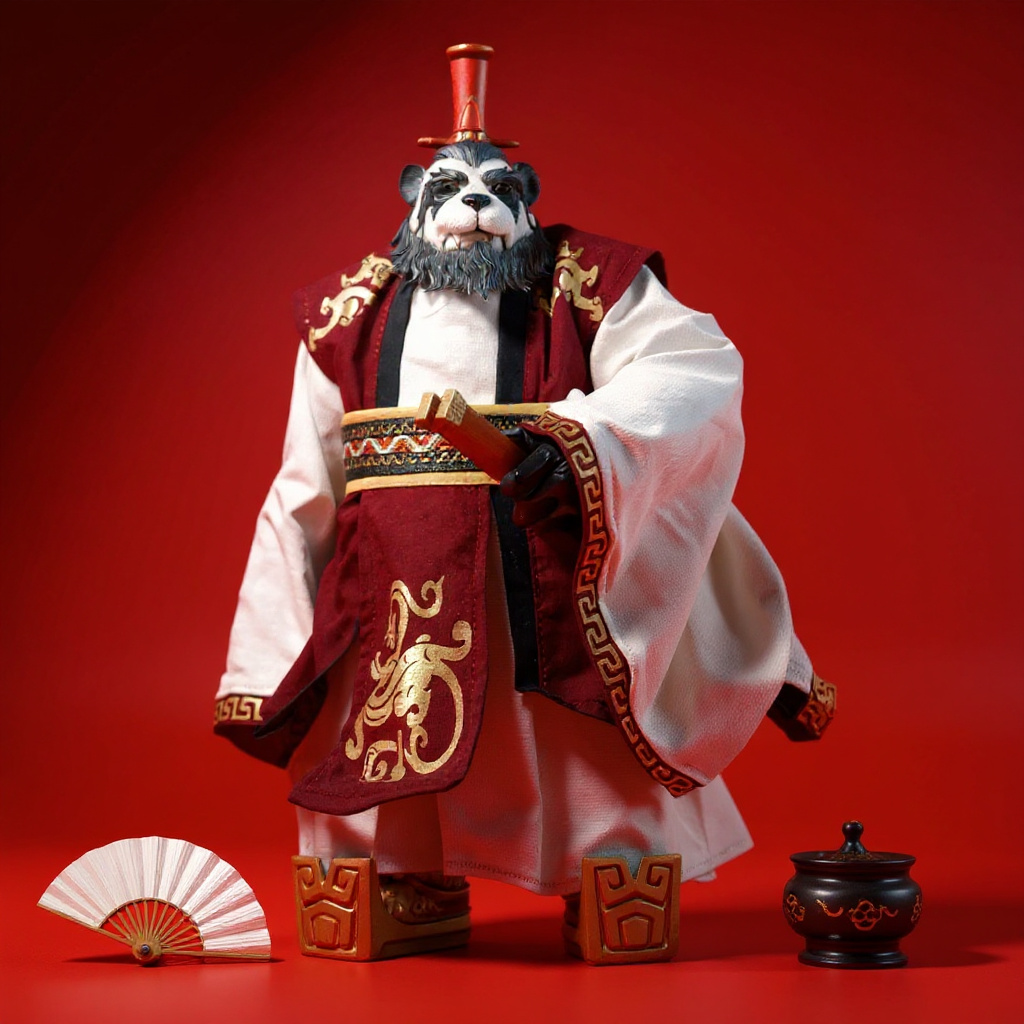
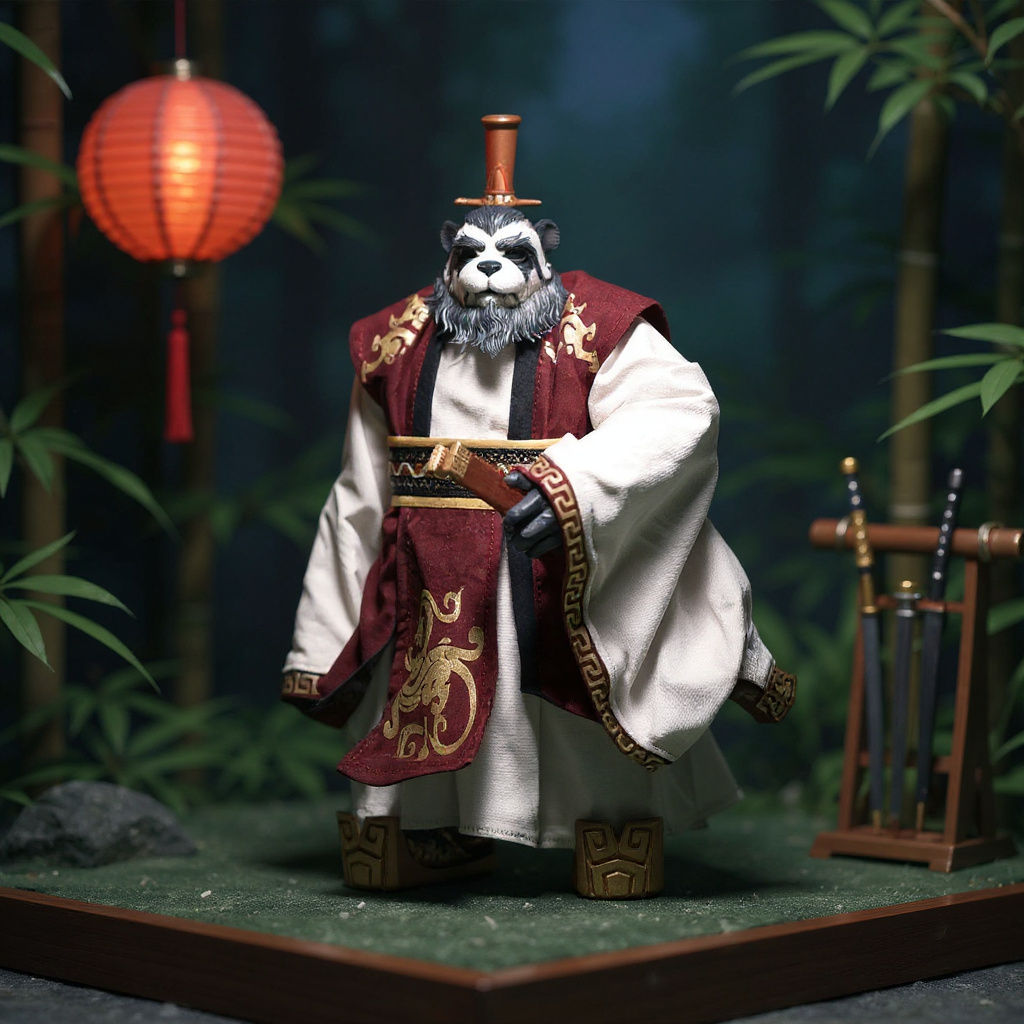
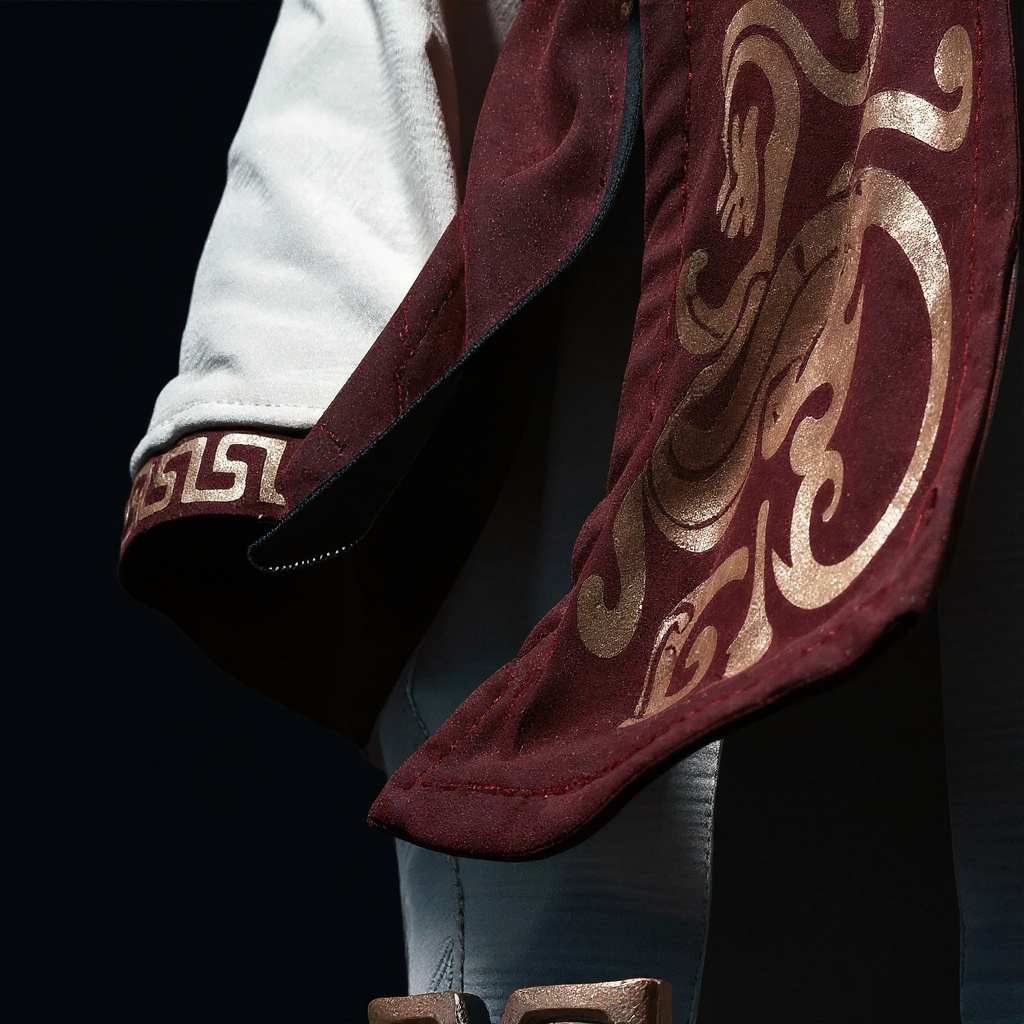
For the 7-Inch Action Figure Chinese Cloak | Wu Qinglie Panda General Cape | Handmade Wired Cloth Costume, the internal wire framework runs along the layered hem edges, letting you shape wind-blown swoops or tight, precise folds that hold through an entire shoot. The embroidered trim and muted red-and-gold palette stay legible even when the cape is bent into a sharp curve — something flat plastic capes can't do.
Honestly, if you live somewhere humid, skip uncoated floral wire for anything you plan to display long-term. It rusts inside the fabric channel within a season and leaves an orange stain you can't wash out. Use coated wire or stainless steel instead, even though it costs more.
| Garment Type | Wire Gauge | Placement | Effect | Rewire Frequency |
|---|---|---|---|---|
| Cape edges | 22-gauge | Hem only | Dramatic swooshes | Rarely, holds 1-2 years |
| Long coats | 24-gauge | Side seams + hem | Structured drape | Every 6-12 months |
| Scarves | 26-gauge | Throughout | Full poseability | Every 3-6 months |
| Short jackets | None | N/A | Natural drape | N/A |
| Layered cloaks | 20-22 gauge | Hem + inner layer | Deep, sculpted folds | Rarely |
Don't wire everything you own. Short jackets and fitted pants look better when the fabric just moves without help. Save the armature work for pieces where the pose is the whole point.
Pattern Making for Articulated Bodies
Forget human sewing patterns. They don't apply here — action figure bodies need their own approach because of joint limitations and squashed proportions.
For a basic tunic or robe:
1. Front panel: Chest width plus 4mm ease, torso length plus 10mm for tucking 2. Back panel: Same as front, add 2mm width for shoulder blade clearance 3. Sleeves: Arm circumference plus 3mm ease, length measured with arm bent 4. Side seams: Angled to accommodate waist articulation without binding 5. Shoulder seams: Positioned 2-3mm forward of the actual shoulder joint to prevent pulling
Test fit after every seam, not just at the end. Pin pieces together, pose the figure through its full range. If anything binds, add ease in 1mm increments and test again.
According to collectors on Reddit's action figure communities, the single most common fitting mistake is sleeves too narrow at the bicep. Most figures have oversized upper arms built to clear the shoulder joint, and pattern makers who ignore that end up with garments that won't move.
For more pattern references, the sewing and draping archive at Threads Magazine covers small-scale draping principles that apply even though it's written for human-scale garments.
Construction Techniques for DIY Cloth Clothing on Action Figures
Hand-stitching beats machine sewing for this kind of work. You get more control over seam placement, and small adjustments happen mid-construction instead of after you've already committed.
Use a running stitch for straight seams, backstitch at stress points like shoulder joins. Keep stitches small. Not microscopic — 8 to 10 stitches per inch gives durability without adding bulk.
Finish raw edges with pinking shears or a tiny rolled hem. French seams look sharp on human clothing but add too much bulk under 1/6 scale.
Skip functional buttons or zippers at this size. Use snaps, velcro dots, or design the piece to slip over the head instead. A velcro dot hidden under a lapel looks cleaner than any attempt at a working buttonhole at 1/12 scale. Trust me on this one.
Advanced Details That Make the Difference
Professional-looking figure clothing comes down to the details most people skip. Interfacing in collars. Weighted hems on coats. Careful topstitching. These separate amateur work from pieces worth displaying under glass.
Add weight to cape hems with thin chain or small split-shot fishing weights sewn into the lining. This helps the fabric hang the way real cloth does, and it makes wire-supported poses look less like a craft project and more like a costume.
Topstitching should use thread one shade darker than your base fabric. It defines edges, adds visual interest, and doesn't look busy if your lines stay straight and parallel. Wonky topstitching gives away homemade work from across the room — every time.
For traditional garments like the handmade Chinese cloak we carry, research the real construction methods behind hanfu and traditional court dress. The China Institute's textile collection notes document layering and trim conventions that collectors familiar with the originals will notice within seconds if you get them wrong.
Common Problems and Quick Fixes
Even people with years of sewing experience run into trouble at this scale.
Fabric won't lie flat: Seam allowances too wide. Trim to 2-3mm max. Sleeves bind at the shoulder: Add a small gusset under the arm, or reshape the armhole slightly oval instead of round. Pants bunch at the crotch: Lower the rise 2-3mm. Human torso ratios don't map onto action figure bodies. Cape hangs straight down: Add wire to the hem, shape gentle curves into it. Straight edges look stiff and wrong. Colors shift under lights: Test fabric under your actual display lighting before you cut anything. LED strips shift color more than you'd expect. Hems fray nonstop: Pinking shears, or a small dab of fabric glue on raw edges before hemming.Is Custom Better Than Store-Bought?
Custom action figure clothing runs 3 to 5 times the price of factory pieces. You're paying for fit, materials, and durability mass production skips.
A factory cape costs $15-25. A handmade version with real tailoring, decent fabric, and wire armature runs $60-100. That sounds steep until you count the 8-12 hours it takes to make one yourself, or the frustration of factory clothes that never quite fit.
Here's the honest answer: if you're only displaying figures in static poses on a shelf, factory softgoods are fine. Save your money. But for photography, dioramas, or figures you handle often, custom clothing earns back its price in durability alone — I've had a wired cape hold its shape through 40+ photo sessions without a single re-shape.
Mass-market alternatives covered on toy news sites like Toyark mostly focus on 6-inch scale figures with limited articulation. They're not built for the kind of dynamic posing that makes wire-supported cloth worth the extra cost.
Frequently Asked Questions
How do you make clothes for your action figure? Take six core measurements, pick a fabric weight suited to the scale, cut a pattern with 2-4mm ease built in, and hand-stitch with 8-10 stitches per inch. Test-fit after every seam. What is the 3-3-3 rule for clothes? Not a standard sewing rule. Collectors use it informally to mean 3mm ease, 3 test fittings, and 3mm seam allowances for action figure garments. Is it actually cheaper to make your own clothes than buy them? Rarely, once you count everything. Materials run $10-20 per piece, plus 8-15 hours of labor. Custom sellers charging $60-100 are often cheaper per hour than DIYing your first few pieces. Where can I find custom clothing for my action figures? Etsy lists hundreds of sellers, and quality swings from museum-quality to barely-glued-together between shops. Check for sellers posting close-up photos with visible stitching and measurements listed in millimeters, not vague sizing like "small" or "standard." What's a good rule of thumb for fitting 1/12 or 1/10 scale figures? Add 1-2mm ease for 1/12 scale, 2-3mm for 1/10 scale. Always measure with joints in neutral position, never mid-pose. How do I get into making custom 1/6 scale figure clothing? Start with a t-shirt or basic pants — 1/6 scale forgives more error than smaller scales. Practice on a $20 figure before you touch anything expensive. What measurements do I need to make clothes for a toy? Chest, shoulder width, arm length, torso length, hip circumference, and inseam. Add neck circumference for anything with a collar. How do you deal with dye stains from softgoods on figures? Wash fabric before cutting to strip excess dye. For stains already on a figure's vinyl or plastic, try dish soap and water first, then isopropyl alcohol on a cotton swab. Some dark dye transfer, especially from red fabric, never fully lifts. How long does a wire-supported cape actually last before it needs repair? Coated 22-gauge wire in a cape hem holds its shape for 1-2 years under normal handling. Uncoated wire in humid storage can corrode and stain fabric within a single season. Can I use DIY cloth clothing for action figures displayed outdoors or in direct sun? Not for long. UV exposure fades dye within a few months, and humidity swells wire-sandwiched seams. Indoor display under LED lighting is the realistic long-term option.What I'd Actually Recommend
Don't start with a complex garment. Make a scarf or a simple cape first — something small enough that a mistake costs you an hour, not a week.
For collectors who want dramatic, wire-supported posing without learning to sew, buying handmade solves the problem outright. The Chinese warrior cloak we carry shows what that looks like at full craftsmanship: internal wire framework under layered fabric, embroidered trim, and a deep red-black-gold palette sized for 7-inch figures, not scaled down from something bigger. Also check our fabric and materials guide and full cloak and cape collection if you want to compare options before committing to a DIY build.
The $74 price tag reflects the materials and the 10-15 hours of hand work behind it. Buy the supplies and tools to do it yourself, and you'll spend nearly that much before you've cut a single piece of fabric.
Written by a hobbyist sewer with six years of experience building wired softgoods for 1/12 and 1/6 scale figures, including custom commissions sold through independent collector marketplaces. Measurements and wire gauge recommendations in this guide come from direct testing on multiple figure bodies, not manufacturer specs.

